
How to Inspect a Used Excavator Before Buying
A working inspection order, from the things that cost tens of thousands down to the things that cost a weekend — plus the four checks people skip and regret.
Most excavator inspections are done in the wrong order. People start with the cab because it is comfortable and finish with the undercarriage because it is filthy — which is precisely backwards, because the undercarriage is where the money is.
1. Undercarriage — do this first
On a tracked machine the undercarriage is commonly the largest single maintenance cost across its working life, and a full replacement on a 20-tonne excavator runs into tens of thousands of dollars. It is also the component most reliably skipped, because it is dirty and at ground level.
- Track chain wear: look at the tops of the links. Sharp, pointed or hooked shapes mean wear; flat and square means life left.
- Sprocket teeth. Same rule — a sprocket worn to a hook is near the end and takes the chain with it.
- Rollers and idlers: look for oil weeping from the seals. Every dry roller is a component you are not replacing.
- Grousers on the track pads. Worn flat means reduced traction and a pad set to buy.
- Track tension and any side-to-side play. Excessive play points at bushings and pins.
- Final drives: any oil leak here is expensive. Listen for whine when tracking during the test.
2. Pins, bushings and the front end
Have someone curl the bucket and boom while you watch the joints from the side.
- Play in bucket, stick and boom pins. Some is normal; visible knocking is a rebuild.
- Weld repairs on the boom or stick. A repair is not automatically bad, but an undisclosed one asks what else was not mentioned.
- Cracks around the boom foot and the bucket ears — the two highest-stress areas.
- Cylinder rods: any scoring, pitting or weeping at the gland seal.
- Quick hitch condition and whether it actually locks properly.
3. Hydraulics
Warm the machine up, then work everything to full extension and hold it there.
- Cylinder drift. Raise the boom, hold it, and time how long before it creeps down. Drift means internal seal wear.
- Cycle speeds — slow or uneven movement suggests a tired pump or a relief valve issue.
- Every hose and fitting for weeping. Surface film is one thing, a drip is another.
- Oil condition through the sight glass: milky means water, dark and burnt-smelling means heat.
- Auxiliary circuits, if you plan to run a hammer or an auger. Test them, do not assume they work.
4. Engine and cooling
- Cold start. It should fire without extended cranking or a cloud of smoke.
- Blue smoke suggests oil burning; white can mean coolant or unburnt fuel; a puff on start that clears is usually acceptable.
- Coolant level and condition, and whether the radiator core is packed with dust or damaged.
- Any sign of a coolant or oil leak from the head area.
- Belts, and the state of the air filter — a filthy air filter says a lot about the servicing generally.
- Fault codes on the display. Ask for them to be read out rather than accepting "there are none".
5. Cab and controls
Last, not first. A tidy cab on a worn machine is a sales decision, not a mechanical one.
- Compare cab wear to the hour meter. A worn seat, polished controls and rubbed decals on a "low hour" machine means the meter is not telling the truth.
- Air conditioning working properly — in an Australian summer this is a productivity item.
- All gauges, lights and the display functioning.
- Glass, door seals, and whether the cab is watertight.
The four checks people skip
- The service records themselves, not a description of them. "Fully serviced" with no invoices is a sentence, not evidence.
- A cold start, for the reasons above.
- The undercarriage measured rather than glanced at. A dealer serious about the sale will let you get underneath.
- A PPSR search before money moves, to confirm there is no finance owing on it. It costs a few dollars and is the single cheapest risk you will ever remove.
Excavators currently listed
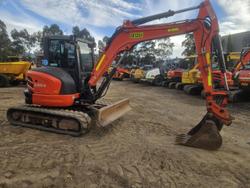
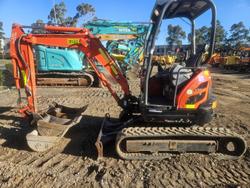
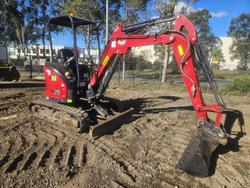
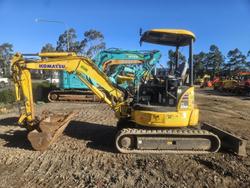
Recently listed excavators
Read from our index on 30 September 2026 · 609 matching listings · median asking price $85,000 · $15,850 to $1,145,000
Common questions
What is the most expensive thing to check on a used excavator?
The undercarriage — chains, rollers, idlers, sprockets and track shoes. It is commonly the largest single maintenance cost over a machine's life, and a full replacement on a 20-tonne excavator can run into tens of thousands of dollars. Inspect it first, before the cab.
How many hours is too many on an excavator?
Hours only mean something alongside service history and the work the machine did. A 10,000-hour machine with complete dealer records and a documented rebuild can be a better purchase than a 4,000-hour machine with no history. What matters is whether visible wear matches what the hour meter claims.
Should I get an independent inspection?
For anything above roughly $50,000, yes. A few hundred dollars spent on a mechanic familiar with that make buys you findings you cannot reach yourself and a written report that is useful leverage on price whichever way it goes.
Why does a cold start matter?
A warm engine hides hard starting, start-up smoke and hoses that only weep when cold. If the machine is already running when you arrive, ask to come back and start it cold. Reluctance to allow that is itself informative.
Looking for something specific?
Search live stock from Australian dealers, or work out what a repayment looks like before you start.