
Buying Your First Excavator: A Complete Guide
Which size class actually suits residential and landscaping work, what a tilt hitch and attachments really cost, how you will move the machine, and the inspection you can do yourself.
The first excavator is the purchase that turns a subcontractor into a plant owner. It also changes the business — you now have an asset that has to be moved, maintained, insured and kept busy, and none of that was your problem when you were hiring one in.
This covers sizing, what to budget beyond the machine, and how to inspect one without a technician standing next to you.
People buy too big, almost always
The reasoning is understandable. You quote a big job, you imagine needing the reach, you buy for the job you might win rather than the work you do every week. Then the machine spends its life on residential blocks it barely fits, burning more fuel and costing more to float than a smaller one would.
| Class | What it actually suits |
| 1.7 t to 2.5 t | Access through a 900 mm gate, pool digs, indoor and courtyard work, trenching between houses |
| 3 t to 5 t | Landscaping, footings, drainage, small civil. Moves on a tag trailer behind a suitable ute. |
| 5 t to 8 t | Residential civil, driveways, service trenches, retaining and batter work |
| 8 t to 14 t | Subdivision civil, road maintenance, bulk work on constrained sites |
| 20 t and up | Bulk earthworks and demolition. Cheap to hire when you need one; expensive to own if you do not. |
For landscaping and general residential work, the 3 to 5 tonne band is the one that pays for itself. It fits most sites, it moves without a float, it has enough breakout for footings and drainage, and the resale market for it is the deepest in the country. If you occasionally need a 20 tonne machine, hire the 20 tonne machine.
Wet hire versus owning
Wet hire — you and the machine, hired out together — is how most operators test the numbers before they buy. It is worth being honest about the comparison.
Owning wins when the machine is on paid work most weeks. You keep the hire margin, you control the maintenance, and the asset depreciates against your business rather than someone else’s. Owning loses when utilisation is patchy, because the finance payment, insurance, registration on the trailer and the storage do not pause between jobs.
The rule of thumb worth applying: if you have been hiring the same size machine most weeks for six months, the numbers probably work. If your work is seasonal or you are still building a client base, hiring in for the peaks is cheaper than owning through the troughs.
The excavator market as we currently index it
Total listings, price range and median across the dealer sites we read. Useful for sanity-checking a quote before you negotiate.
Read from our index on 30 September 2026 · 609 matching listings · median asking price $85,000 · $15,850 to $1,145,000
The budget is not the machine price
- Attachments. A mud bucket, a trenching bucket, a rock bucket and maybe an auger or ripper. Often a significant fraction of the machine price on a compact machine.
- Hitch. A hydraulic quick hitch is worth having. A tilt hitch adds around 40 to 45 degrees of tilt each way and changes batter, drainage and finishing work completely. Retrofitting costs materially more than buying the machine with one fitted.
- Transport. A tag trailer for a 5 tonne machine, plus a vehicle rated to tow it — which is often a truck, not a ute, once you add the trailer and the attachments.
- Insurance. Plant and machinery cover, plus cover in transit, plus public liability if you did not already carry it.
- Consumables and first service. Buckets wear, teeth get replaced, and you want a full service done under your name at the start.
- A repair fund. Something hydraulic will need attention in the first year.
You will need something to move it
This is the cost first-time buyers miss most often. A 5 tonne excavator plus a tag trailer plus a couple of attachments is well past what most dual-cab utes can legally tow once you account for GCM, not just towing capacity. The honest answer is often a light truck with a beavertail or a car licence tipper and plant trailer, which is a second purchase and a second registration.
The alternatives are paying a float operator every movement, which is fine occasionally and expensive weekly, or buying a machine size that matches the towing you already own. Work this out before you choose the excavator, because it can change which excavator makes sense.
Excavators currently listed under $120,000
Read from the dealer sites we index. Check the stated hours, year and whether attachments are listed — and whether the price includes GST.
Read from our index on 30 September 2026 · 201 matching listings · median asking price $66,500 · $15,850 to $120,000
 Used12
 Used12
 New12
New12 Used12
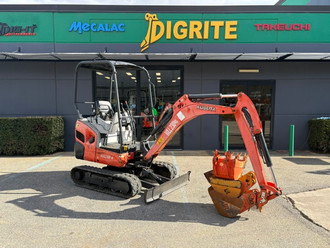 Used12
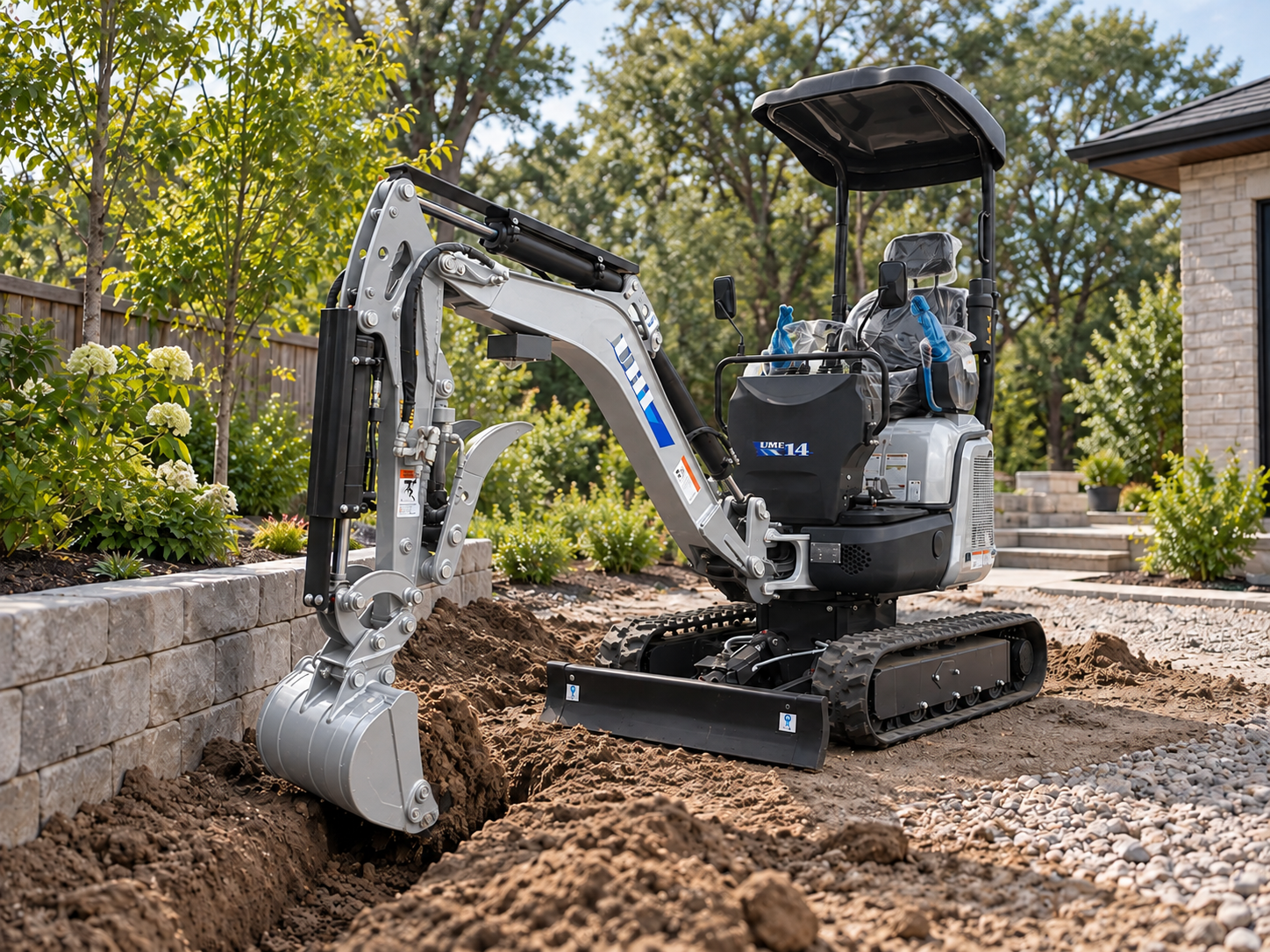 New12
New12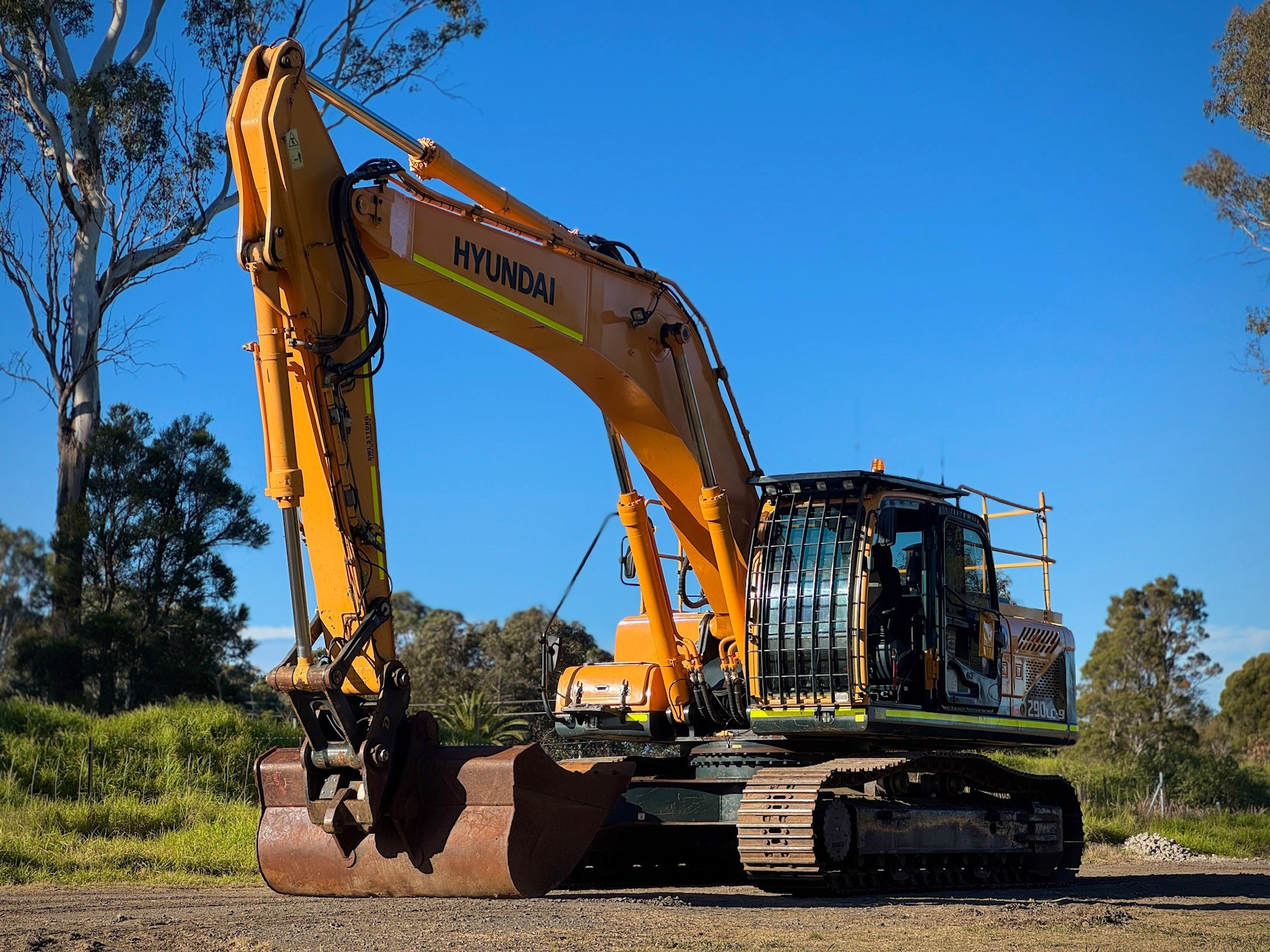 Used4
Used4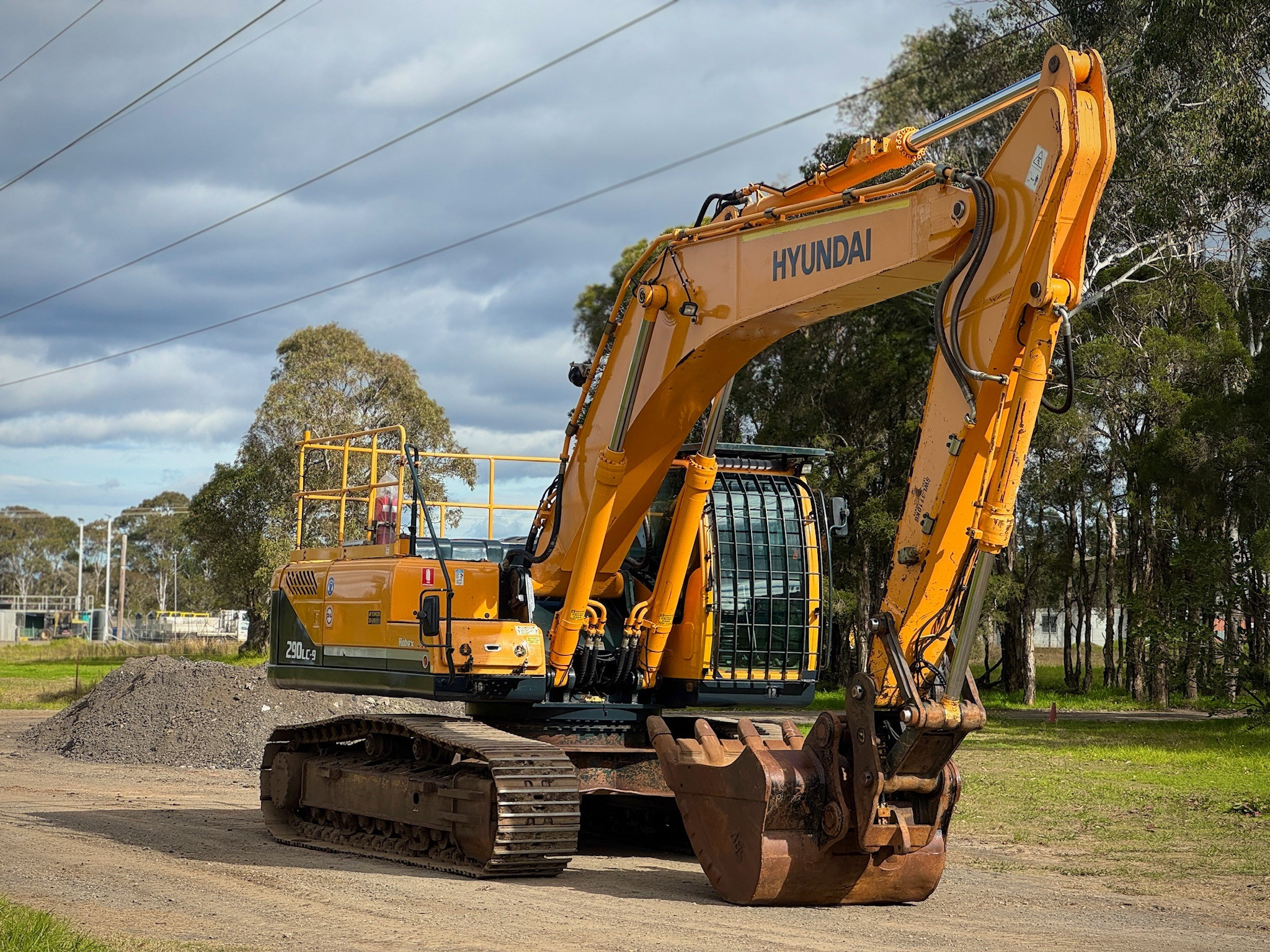 Used4
Used4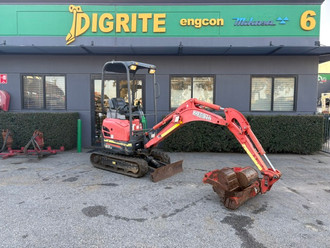 Used12
The twenty-minute inspection you can do yourself
You do not need to be a technician to find most of what is wrong with a used excavator. You need to look in the right order and not be rushed.
- Undercarriage first, before the paint. Look at track chain stretch, roller and idler wear, sprocket tooth shape and remaining track shoe height. This is the largest single cost item on a tracked machine and the easiest to overlook.
- Pins and bushes. Start the machine, rock the bucket side to side and watch for movement at each pin. Play here tells you how hard the machine worked.
- Cylinders and hoses. Look for wet weeping at rod seals, hose ends and the swing motor. Wet is a repair; damp and dusty is a watch item.
- Oils. Engine oil milky means water. Glitter in hydraulic oil means stop and get a technician.
- Cold start. Ask them not to warm it up before you arrive. A cold start shows you smoke colour, cranking and knocks that a warm engine hides.
- Full function test. Slew a complete circle both ways, boom and stick to full reach, curl the bucket, track forward and back, and lift the machine off one track with the boom. Slow, uneven or noisy movement points at pumps, valves and final drives.
- Plates and meter. Photograph the serial plate, hour meter and ROPS/FOPS plate. A repaired or unplated cabin is a site access problem.
What needs a technician: hydraulic flow and pressure testing, engine compression and blow-by, final drive and swing drive condition, and a diagnostic scan for stored codes. On a machine over about 8 tonnes, an independent pre-purchase inspection is cheap against the size of the cheque.
Hours, and reading them properly
Hours drive the asking price more than they should, which is exactly why a documented high-hour machine can be better buying than a low-hour one with no history. What matters is what the hours were spent doing, whether they were idle hours, and whether the meter is original.
Our separate guide on reading hours on a used excavator goes through this in detail — including how to check the meter against the service records and the physical wear. It is worth reading before you inspect anything.
What first-time buyers overpay for
- Low hours with no service history. The number is reassuring and the absence of records is not.
- Fresh paint. Repainting a machine costs little and hides a great deal. Look at the areas nobody bothers to paint.
- Size. A 13 tonne machine bought for occasional work that a 5 tonne machine would have done ninety per cent of.
- Attachments they do not need yet. Buy the buckets the work requires; add the rest when a job pays for it.
- Brand new when a two-year-old ex-fleet machine with a warranty balance was sitting in the same yard.
Finance and what the lender is looking at
Machinery is usually funded by chattel mortgage or hire purchase, with rental and operating lease structures used where a business wants the asset treated differently. The right structure depends on your tax position and how long you intend to hold the machine, which makes it an accountant question rather than a buying-guide one.
What lenders assess is the machine as much as the borrower: age, type, serial number, and whether it is a dealer sale or a private one. Newer machines from dealers are the easiest to fund. A twenty-year-old machine bought privately is the hardest, and sometimes the answer is a secured business loan rather than equipment finance at all.
On your side they will want ABN and GST status, time in business, industry experience, deposit or trade, and recent financials or bank statements. Have that ready before you shortlist, and get an indicative limit so you know your number. Our finance calculator will show you the repayment shape while you are still looking.
Run a PPSR search by serial number before you pay — about $2, and the only way to know the machine does not carry a previous owner’s security interest that would follow it to you.
Common questions
What size excavator is best for a first machine?
For landscaping and residential work, 3 to 5 tonnes. It fits most sites, tows on a tag trailer, has enough breakout for footings and drainage, and has the deepest resale market in Australia. Buyers who regret their first machine almost always bought bigger than their weekly work needed.
Can I tow a 5 tonne excavator with a ute?
Usually not legally once you add the trailer and attachments, because the limit is the combination mass rather than the headline towing capacity. Many owners of 5 tonne machines end up with a light truck and beavertail. Work out how you will move the machine before you choose its size.
Is a tilt hitch worth the money?
On batter work, drainage grades and finishing, it changes what one operator can do without repositioning. It is materially cheaper bought as fitted equipment than retrofitted later, so it is worth deciding at purchase rather than after.
How do I know if the hour meter is genuine?
Cross-check the reading against the service history, the ECU where the machine has one, and the physical wear on pins, bushes, undercarriage, seat, controls and pedals. A machine whose wear does not match its meter deserves a full explanation before you go further.
Should I buy at auction for a first machine?
Auctions reward buyers who know the model and can inspect thoroughly. For a first machine, a dealer-prepared unit with some warranty and a counterparty you can go back to is usually the better value once you account for the risk of an as-is purchase you could not test under load.
Do I need a licence to operate an excavator in Australia?
Earthmoving plant is generally covered by verification of competency rather than a government high risk work licence, though sites and head contractors often require documented training and a ticket. Forklifts and slewing telehandlers do require a high risk work licence.
Looking for something specific?
Search live stock from Australian dealers, or work out what a repayment looks like before you start.